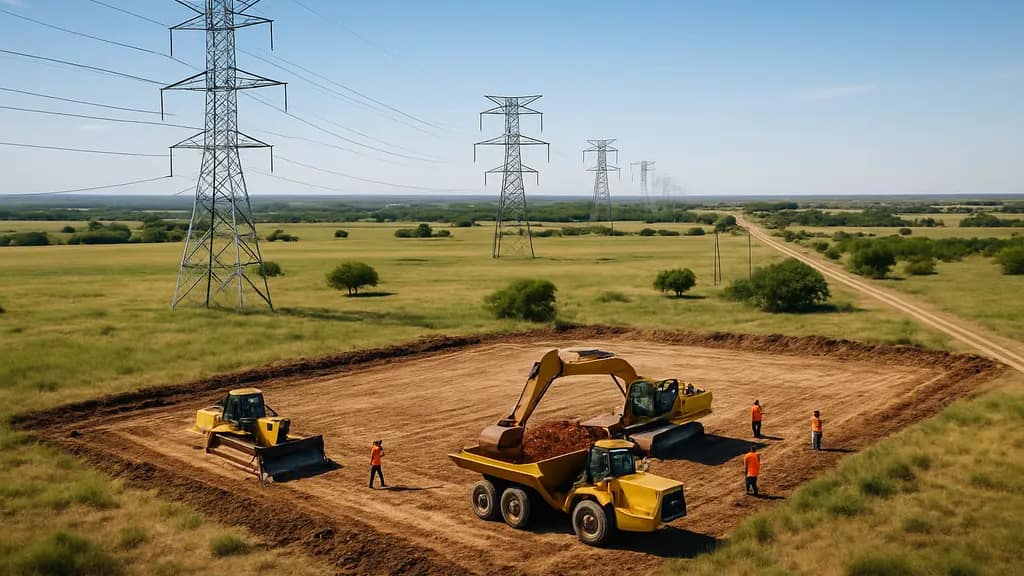
The Texas AI power plant proposal tied to Amazon’s planned AI data center campus in Pecos County has become a test case for how large computing projects are being paired with dedicated energy infrastructure. The core concern is not only the size of the AI campus, but the proposed 7.65-gigawatt natural gas plant intended to supply electricity to it. As of August 27, 2026, the project remained planned or under development, and several key details still depended on permitting, grid connection decisions, and operating patterns.
For a technical audience, the useful question is not whether AI infrastructure is good or bad in a slogan sense. It is more precise to ask what has changed in the system design, which risks are documented, and which impacts remain uncertain until operating data exists. In a team briefing, I would treat this like game film: isolate the formation, identify the pressure points, and avoid claiming more certainty than the evidence supports.
What The Texas AI Power Plant Proposal Contains
Texas AI Power Plant Scale And Configuration
Amazon’s plan, as described in the available reporting, links an AI data center campus in Pecos County, Texas, with a proposed 7.65-gigawatt natural gas power plant. Data Center Knowledge reported that Amazon has explored a grid connection for an 8,000-acre AI campus, including the possibility that the plant could connect to the grid rather than operate only as isolated on-site generation according to Data Center Knowledge.
The research notes state that the proposed gas plant would use 35 simple-cycle turbines. That configuration matters because the emissions profile of any fossil-fueled plant depends on how often it runs, how it is dispatched, and what its permit allows. The distinction between permitted maximum emissions and expected actual emissions is not a minor technical footnote. It is central to how communities, regulators, and power-sector analysts should read the numbers.
Behind-The-Meter Design And Grid Ambiguity
The project has been described as using behind-the-meter generation, meaning electricity would be produced on-site for the data center rather than purchased exclusively from the state grid. That architecture can reduce dependence on external supply for the data center operator, but it also shifts a large energy decision into a project-level design choice. If the facility later connects front-of-the-meter and supplies power beyond the campus, the public-interest analysis changes because the plant becomes part of a broader grid resource discussion.
This is one reason the Texas AI power plant debate has not stayed confined to data center siting. It touches electric reliability, air permitting, local notice, emissions accounting, and water resource questions. The technical facts are connected, and presenting them as separate slides can hide the system-level tradeoffs.
Emissions, Permits, And Climate Claims
Permitted Emissions Versus Likely Operations
The highest-profile environmental concern is the scale of potential emissions. Reporting cited in the research says the proposed plant’s permits could allow up to 33 million tons of carbon dioxide emissions each year. Ars Technica reported that the plant could become the largest single source of U.S. climate pollution if operated as permitted, while also noting the tension with Amazon’s earlier net-zero-by-2040 climate pledge as per Ars Technica’s report.
That number should be handled carefully. A permit ceiling is not the same thing as a measured annual output. Actual emissions would depend on whether all turbines are built, how many hours they run, what fuel use looks like, and whether dispatch is shaped by data center load, grid sales, or reliability needs. Still, a high permitted ceiling matters because it defines what could legally occur absent later constraints, equipment changes, or permit revisions.
Air Pollutants And Public Review
The research also identifies concern over smaller or staged air permits in Texas, including permits by rule and standard permits that may require less public notice and less environmental review than major-source permitting. In the reported examples, permits were associated with gas turbines and backup diesel generators and with more than 1.6 million tons of greenhouse gases plus more than 1,000 tons of other air pollutants per year.
The policy risk is not only the emissions total. It is the review pathway. If large infrastructure is divided into smaller permit actions, residents may struggle to see the full buildout before construction or operation decisions are largely locked in. That is a communication failure as much as a regulatory one. A clear chart showing each permit, unit count, pollutant category, and public-comment trigger would do more for community understanding than a dense packet of filings.
Community And Health Concerns
Notice, Construction, And Local Quality Of Life
Community concerns documented in the research include construction dust on properties, visible turbine exhaust stacks from homes, and residents feeling that they learned too little about project plans until after construction had begun in summer 2024 in related Texas AI campus activity near Abilene. These details should not be overstretched into claims about every affected town. They do, however, show the kinds of impacts that can appear before a plant reaches full operation.
For local meetings, the better format is a phased impact map: construction, commissioning, normal operation, backup generation, and potential grid export. Each phase has different concerns. Dust and traffic sit in one column. Air pollutants and emissions sit in another. Water demand and emergency operations sit elsewhere. That structure helps residents challenge the right assumption at the right stage.
Ozone, Respiratory Risk, And Equity
The research notes also raise health and environmental equity concerns because many proposed or planned data-center-linked power plants in Texas are in areas that already violate federal ground-level ozone standards. The concern is that emissions from gas turbines and diesel generators could add pollution in places where respiratory risk is already a public-health issue.
There is uncertainty here because the exact health outcome from a specific project depends on location, meteorology, operating hours, emissions controls, and existing background pollution. But uncertainty does not erase the need for review. It argues for clearer modeling, plain-language public explanation, and monitoring commitments that residents can understand. Public communication resources, including educational models such as Stamps in Class, emphasize the importance of structured explanations when technical material affects non-specialist audiences.
Grid, Water, And Operating Tradeoffs

Grid Connection Could Change Who Is Affected
The Texas AI power plant proposal is technically different depending on whether it remains primarily behind-the-meter or links more deeply with the grid. A behind-the-meter plant mainly raises questions about private energy supply, local emissions, and resource use. A front-of-the-meter connection raises broader questions about transmission, reliability, dispatch, and whether costs or benefits spill over to other electricity customers.
The research identifies worries that rapid growth in data-center-linked power plants could strain Texas grid infrastructure, affect reliability, and contribute to higher bills for residential customers. Those outcomes are not proven for this specific project in the provided material. They are risks to test through interconnection studies, transmission planning, and rate-impact analysis. A cautious assessment would not assume the worst case, but it would require the project sponsor and regulators to show how grid impacts are being bounded.
Water Use Remains A Local Resource Question
Water is another unresolved issue. Natural gas power plants can require water for cooling, plant operations, and pollution-control processes, while large AI data centers may also require water depending on cooling design. The research does not provide project-specific water volumes, aquifer impacts, or cooling technology details, so firm conclusions would be premature.
That limitation should be stated openly. In arid West Texas, however, even uncertain water demand can become a material community concern. The right evidence set would include projected annual withdrawals, peak-day demand, source water, discharge handling, drought assumptions, and contingency plans. Without those figures, residents are left with an incomplete scoreboard.
- Known from the research: the AI campus is paired with a proposed 7.65-gigawatt gas plant in Pecos County.
- Known from permit reporting: annual CO₂ emissions could reach very high levels if the plant operated as permitted.
- Still uncertain: actual dispatch, final grid role, water demand, and long-term local exposure levels.
- Most affected groups: nearby residents, grid customers, local water users, regulators, and data center operators.
Texas AI Power Plant Community Review
The Texas AI power plant proposal shows how AI infrastructure is no longer just a server, chip, or software planning issue. It is an energy siting issue with emissions, water, grid, and public-notice consequences. The evidence available by August 27, 2026 supports concern, but it also requires careful language: permitted emissions are not measured emissions, potential grid effects are not confirmed rate impacts, and water concerns need project-specific numbers.
For decision-makers, the practical test is whether the full system can be evaluated before the most consequential choices are fixed. That means aggregating permits transparently, explaining behind-the-meter and front-of-the-meter options, publishing emissions assumptions in plain terms, and presenting local impacts in formats residents can challenge. In sports terms, nobody should be asked to judge the play from a cropped replay. The full field view matters here, and the Texas AI power plant needs that level of public scrutiny.