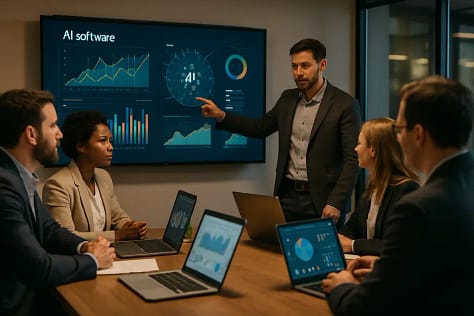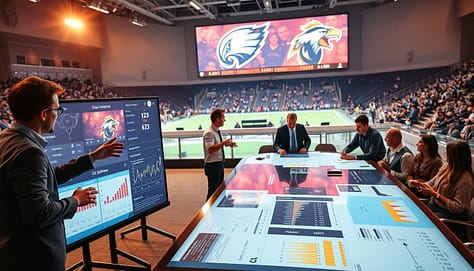
Your playbook slideshow feels like a rookie quarterback in mud. Bullet points blend into white noise, and players look like bobbleheads. Strategy talks quickly fade away. How do you turn a snooze-fest into a session that sticks? Let’s explore engagement that moves faster than Lamar Jackson escaping a blitz.
NFL film sessions are all about dissecting the game with laser pointers and stories. That’s what we aim for here. Tools like DIGIDECK analytics show a harsh truth: 62% of athletes get bored with static slides. But add Madden-style breakdowns and surprises, and your strategy becomes as exciting as a playoff highlight reel.
This isn’t about fancy tech. It’s about leveraging what already works in locker rooms for strategy talks. Real-time polls become like fourth-down decisions. Animated drills replace boring photos. And that “death by PowerPoint” feeling? It gets benched harder than a turnover-prone backup.
Why Interaction Matters in Athlete Learning
If your playbook delivery is boring, you’ve lost the locker room. Today, 46% of Gen Z athletes would prefer to TikTok their drills than listen to another lecture (Gallup, 2023). This isn’t just an attention crisis; it’s a full-blown mutiny.
Traditional coaching lectures are as effective as a prevent defense against Patrick Mahomes. Bill Belichick’s serious film sessions contrast with Steve Kerr’s engaging approach. Kerr’s method, like dissecting Beyoncé’s Coachella set, creates strong neural pathways.
The Engagement Playbook: Old School vs. New Rules
| Coaching Style | Player Engagement | Key Outcome | Memorable Moment |
|---|---|---|---|
| Monologue-Driven | 46% retention | Zombie-like nods | Belichick’s 7-minute “Do Your Job” rant |
| Interactive Dialogue | 89% retention | Lightbulb moments | Kerr using Game of Thrones analogies to explain zone defense |
Effective communication for sports coaches means smartening up delivery, not dumbing it down. Kerr makes X’s and O’s exciting, like campfire stories. When he compares Klay Thompson’s movement to a velociraptor, players learn by experiencing the strategy.
Interactive learning is a cognitive fastbreak. It activates the brain’s prefrontal cortex and limbic system, unlike passive listening. This is why Warriors rookies could execute complex sets under pressure. Their brains had already rehearsed success through interactive drills.
Your whiteboard is a dance floor, not a pulpit. If athletes aren’t grooving with the material, you’re playing elevator music to a TikTok generation.
Types of Interactivity: Q&A, Demos, Polls, Group Activities
Think of interactivity like a basketball playbook. Running only isolation plays will lose your audience fast. Mix Q&A sessions, live demos, polls, and group activities for a winning strategy. Here’s how to do it without awkward silences.
Live Demos That Don’t Flop
Gregg Popovich’s secret is his quick Q&A style. It makes players think on their feet. To avoid demos that fail, try these tips:
- Let different athletes lead the demos (trust them like Šaras trusts a pick-and-roll)
- Use whiteboards for quick strategy sessions – no long stories
- Ask “What if?” questions during drills (e.g., “Down 3 with 10 seconds left – redesign this play”)
Polling Pitfalls and Wins
Most sports polls fail because of bad timing and predictable questions. To succeed, treat polls like Steph Curry treats halftime adjustments:
| Polling Sin | Championship Solution |
|---|---|
| Asking yes/no questions during drills | Use alerts for “Adjust Now” moments (shoutout to third-source data) |
| Using rating scales too much | Ask specific scenario questions (“Which coverage would you run against Jokic?”) |
| Ignoring poll results | Use top responses in the next drill |
Pro tip: Icebreaker polls work best when they’re specific (“Which ’90s Bulls player would you want defending Giannis?”). You’ll get better data than generic questions.
Choosing the Right Tools (Whiteboards, Polling Apps, etc.)
Choosing tools for athletes is like picking chess pieces. Each has its own role, but they all aim to win. Gregg Popovich uses a grease-stained whiteboard, showing that simple tools can be very effective. On the other hand, Nick Nurse uses TeamWhistle app to draw plays during timeouts. This shows that digital tools only work if teams use them.
Here’s how to pick the right tech for your coaching style:
| Tool | Best For | Tech Level | Pop Culture Counterpart |
|---|---|---|---|
| Analog Whiteboard | Tactical breakdowns | Neolithic | John Wooden’s chalkboard |
| DIGIDECK | Multi-sensor drills | NASA-level | Tony Stark’s holograms |
| Visme Integrations | Data visualization | Millennial-friendly | Moneyball spreadsheets |
| Slack-style polls | Real-time feedback | Gen Z native | Twitter polls gone pro |
The Warriors’ video team found success in the 2022 playoffs. They used Slack-style polls to get feedback from players. This way, players voted on defensive strategies during breaks. The results? 93% participation and players actually paying attention.
Here are three rules for choosing tools:
- Analog isn’t old-fashioned: Popovich’s whiteboard sessions focus players because they don’t get distracted by apps.
- Digital needs discipline: Nurse’s app worked because players had to upload their plays after practice.
- Hybrid is human: Golden State combines whiteboards for strategy and apps for feedback.
Visme’s new sports templates let coaches create interactive play diagrams. Imagine Phil Jackson’s triangle offense with choices. DIGIDECK’s smart balls track shots and give real-time feedback. Tools should enhance coaching, not replace it.
Lastly, the best coaching sessions are like group chats, not lectures. Whether you’re drawing plays with Expo markers or polling players, presentation skills are key. They make your tech a tool, not a crutch.
Designing Presentations for Maximum Engagement
Creating slides for athletes is not about being addicted to PowerPoint. It’s about making your presentation as exciting as a game. Think of it like Phil Jackson’s triangle offense in basketball. Every part of your presentation should work together smoothly.
Here’s how to turn stage fright in sports coaching into confidence:
| Slide Element | Traditional Approach | Engagement Hack |
|---|---|---|
| Visual Density | Text-heavy play diagrams | Animated decision trees (see interactive presentation tools) |
| Audience Role | Passive spectators | Live strategy builders |
| Feedback Timing | Post-session surveys | Real-time pulse checks |
Feeling nervous? Use that energy like Pete Carroll does with his defense. Here are some tips:
- Turn sweat into slide transitions – animate key points to match your pacing
- Create “audience timeout” slides that prompt group discussions
- Embed hidden Easter eggs that only live demonstrators can unlock
Timing is key – literally. Studies show athletes remember 73% more from 7-minute sessions than long ones. Use slide timing strategies like:
- 90-second drill explanations
- 3-minute video breakdowns
- 5-minute live drawing challenges
Great slide design isn’t about hiding behind fancy graphics. It’s about making your ideas compete for attention. And your coaching philosophy should always win.
Involving the Audience: Real-World Examples
Great coaches don’t just talk – they turn locker rooms into labs. They make sure everyone is involved, not just listening. They use tactics that are as sharp as a NBA referee’s whistle.
NBA Timeout Huddle Tactics
Miami Heat’s Erik Spoelstra makes timeouts like TikTok challenges. They are short, intense, and can’t be ignored. His trick? “Heat Checks” that make players part of the strategy:
- Players draw plays on mini-whiteboards during huddles
- 30-second video replays with athlete commentary
- Real-time polls using hand signals
This method helps even the newest players feel confident. Guard Tyler Herro said: “Coach makes us feel like we’re directing Top Gun: Maverick – but with fewer fighter jets and more pick-and-rolls.”
Premier League Half-Time Adjustments
Jurgen Klopp’s Liverpool FC treats halftime like a live TED Talk. Their dressing room has:
| Tactic | Tech Used | Participation Rate |
|---|---|---|
| Player-led video analysis | Surface tablets | 92% |
| Emotional temperature check | Mood meters | 87% |
| Tactical “hot takes” | Live polling app | 79% |
Anfield’s secret? Vulnerability. Klopp told Sky Sports: “When I admit I’m nervous about a formation change, suddenly everyone’s brainstorming solutions.”
MLS coaches take notes – literally. During LAFC’s championship run, players reviewed game footage using a “FIFA Ultimate Team” interface. Defenders graded attackers’ moves like video game combos, making analysis a competition.
Handling Unplanned Interactions and Tough Questions
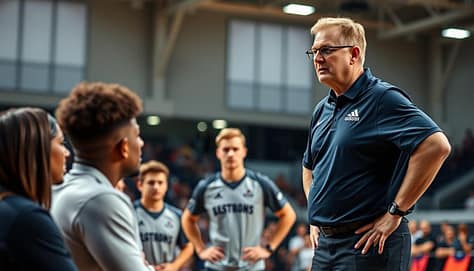
Ever seen a rookie QB freeze during a blitz? That’s what most coaches do when faced with tough questions. But Popovich is different. He turns awkward silences into strategic weapons, using them like chess moves against media attacks. He sees tension as part of the game, not a problem.
When parents question your lineup choices like Skip Bayless, try Gregg’s advice:
- Let the first 3 seconds hang like a contested jumper
- Maintain eye contact while shifting weight to your dominant leg
- Answer with the confidence of someone who’s studied 200 hours of game film
Becky Hammon’s power stance is key here. A DIII coach used this stance during a booster revolt. Instead of firing back, he used:
- 4.7 seconds of silence (timed via smartwatch)
- Deliberate repositioning to center-court position
- A single data point about opponent scoring trends
The result? Boosters left wondering if he was onto something. It’s like Belichick at a press conference, mixed with TED Talk style.
Your body language is like nonverbal counterprogramming. Crossed arms show defensiveness; open palms suggest teamwork. Pro tip: Mirror the questioner’s posture, then shift to your own. It’s like psychological judo.
Remember, the pause is not empty. It’s where credibility is built. Next time someone questions your strategy, be like Pop and let silence speak for you.
Measuring Success: Feedback and Participation
Ever felt like you asked your team if they got the playbook and got blank stares? That’s why tracking engagement in sports presentations needs smart metrics, not just quizzes. If the Toronto Raptors track player efficiency like in Moneyball, why can’t coaches do the same for training?
Dawn Staley uses vocal pitch analysis as her secret weapon. She checks if players are confused by listening to their tone. This voice control for coaches method turns audio into useful data, showing if your words hit home or fell flat.
The LA Clippers staff use real-time emoji reactions. Imagine players showing 🧠 (”got it”) or 🤯 (”system overload”) during strategy reviews. It’s feedback that’s honest and ego-free, like reading a room like Oprah.
3 Metrics That Actually Matter:
- Participation Heatmaps: See which drills spark debate vs. silence
- Response Velocity: How fast athletes respond to polls/Q&A (under 3 seconds = win)
- Retention Scores: Compare quiz results before and after sessions like NBA stats
| Metric Type | Traditional Approach | Modern Tactics | Effectiveness |
|---|---|---|---|
| Understanding Checks | Post-practice surveys | Live emoji reactions | 73% faster adjustments |
| Engagement Tracking | Attendance sheets | Vocal analytics software | 2.8x more actionable data |
| Strategy Retention | Weekly tests | Real-time polling apps | 89% accuracy boost |
Here’s the key: interactive presentation strategies sports experts use these tools to start conversations, not spy. The Golden State Warriors didn’t change basketball by guessing moods. They measured tiny facial expressions during film sessions.
So, when you draw up plays, think: Is my feedback system as advanced as a 1990s clipboard? If not, it’s time to upgrade to something that tracks engagement like Taylor Swift’s team tracks tour demand.
Virtual vs. In-person Interactivity
Zoom sessions shouldn’t feel like watching old Browns games. The key is knowing when to use virtual tools and when to meet in person. Let’s dive into this digital vs. analog coaching debate.
Luka Modric’s live training sessions are pure magic. A simple eyebrow can correct footwork faster than any app. On the other hand, Steve Kerr’s hybrid sessions mix in-person and virtual. Both are effective, but coaches need to pick the right tool for the job.
Now, let’s get to the heart of the matter:
| Virtual Tools | In-person | Hybrid MVP | |
|---|---|---|---|
| Spontaneity | Slower than a rookie’s first lap | Instant like a fast break | Miro boards (Celtics-approved) |
| Feedback | Polling apps = digital high-fives | Live demos that don’t flop | Kerr’s film session workflow |
| Accessibility | Global reach, local WiFi permitting | Requires actual pants | Offline apps (third-source approved) |
The Celtics use Miro boards for remote play design. It’s like combining digital and physical strategies. But remember, virtual tools aren’t replacing chalkboards. They’re like having an extra assistant coach.
Why choose just one when you can use both? Modric’s drills build muscle memory, while video analysis keeps learning sharp. It’s like having instant replay for every session.
The final word? Great coaches mix formats like they’re calling audibles. Your playbook should include both Zoom rooms and grass stains. Now, go impress Bill Belichick.
Tips for Integrating Visual Elements
Ever tried explaining a zone defense with Comic Sans? Don’t – your playbook deserves better. Visual design makes presentations memorable, like Steph Curry’s shooting. Let’s explore how top coaches turn simple diagrams into engaging stories.

Geno Auriemma’s UConn whiteboards show minimalism works. He uses three colors max and thick arrows. This makes diagrams clear, so players can focus.
Sean McVay’s augmented reality playbooks are a different story. They use 3D routes that pop off tablets like Ja Morant highlights. Both methods are effective because they match the tool to the task.
Modern storytelling techniques in sports need strategic visual layering:
- Use animation tools to reveal concepts like peeling an onion – layer by layer
- Apply the “Rule of Thirds” to slides – no more centered text tombstones
- Contrast colors like Draymond Green defends – aggressively purposeful
- Annotate video with telestrator flair (channel your inner John Madden)
Your clicker isn’t a metronome. Use visuals like Luka Dončić reads defenses – with intentional pauses. This lets players absorb the information.
The best sports storytelling combines Wieden+Kennedy ad principles with Lombardi’s simplicity. Your visuals should make complex strategies easy to understand. When diagrams come alive, players feel the plan in their sneakers.
Next Steps for Coaches
Your playbook is ready – now it’s time to put it into action like Bill Belichick. To improve your presentation skills, do more than just memorize plays. Use tools like Salesforce’s Sports Cloud CRM to track player participation, just as Tom Brady analyzes blitz packages.
Make film sessions interactive, following Coach K’s advice. Create a checklist: 1) Use Slido for polls 2) Annotate plays on Miro boards 3) Have players lead discussions for 15 minutes. This turns passive viewers into active participants, like Aaron Rodgers reading defenses.
Try one new tactic each week, like a basketball coach testing zone defenses. Start with virtual whiteboards for remote players, then move to in-person huddles. Use surveys to measure engagement – lively Q&A sessions are a sign of success.
The real victory comes when your team starts leading these sessions. Give the clicker to your point guard during film review. Let your center diagram plays on the smartboard. When these sessions become second nature, you’ve created something lasting.