
Welcome, coach! Before we dive into drawing X’s and O’s, let’s talk about building a rock-solid foundation. Every great game plan starts with understanding your opponent, not just collecting random notes.
Think of your three non-negotiables as the immovable pillars of your strategy. These are the core strategic truths you simply won’t compromise on, no matter what.
What can’t we allow the other team to do? Is it giving up corner threes? Letting their star point guard get into the paint at will? Professional templates, like those used in the NBA, help you pinpoint these critical tactical keys by organizing team info, offense, defense, and player tendencies.
By starting with your non-negotiables, you build a focused, actionable filter for all the information you gather. This step transforms an overwhelming pile of data into a clear path to a winning strategy.
You’re not just doing opponent analysis; you’re unlocking essential insights into their playcalling and habits. Let’s turn those insights into your next victory!
Visual Tiles: lineup map, top 5 actions, pressure/press zones, and late-game habits
Imagine having a dashboard that shows everything you need to know about your opponent at a single glance. That’s the power of visual tiles. Our brains are wired for pictures, processing images thousands of times faster than text. By translating your scouting notes into clear, at-a-glance visuals, you give your team an instant, shared understanding of the challenge ahead.
Think of these tiles as the building blocks of your game plan. Each one covers a critical aspect of opponent prep. When combined on one page, they create a complete picture of the other team’s identity. Let’s break down the four essential tiles you need to build.
The Lineup Map: Start with who’s on the floor. A simple court diagram with player numbers and positions replaces a confusing paragraph of text. Using a printable Basketball Court Diagram, you can sketch their common lineups. Is their point guard always in the left corner? Does their center float to the high post? This map makes spatial relationships obvious to every player.
Top 5 Actions: Next, list their bread-and-butter plays. Don’t overload your team with twenty options. Boil it down to the five actions they run most often. This could be “Spain Pick-and-Roll,” “Horns Flare Screen,” or “Baseline Out-of-Bounds Lob.” Write them as short, actionable bullet points. This tile answers the question: “What are we going to see over and over again?”
Pressure/Press Zones: This is where pressure maps become your best friend. Where do they trap? Do they full-court press after made baskets? Use a shot chart template or a blank court diagram to shade the areas where their defensive pressure is highest. A visual pressure map is clearer than any verbal description. It instantly shows your guards where the double-teams come from and tells your posts where passing lanes might be open.
These tools, like those found in a comprehensive template pack, revolutionize how you track defensive tendencies. They provide a visual representation of your game plan on a single page. Creating these pressure maps forces you to identify patterns. You’ll see if they always trap the sideline or if their press has a weak side you can exploit.
Late-Game Habits: Lastly, how do they behave when the clock is winding down? Do they isolate their star for a last shot? Do they foul immediately when down by three? Note their crunch-time tendencies in a separate tile. This prepares your team for the moment when the game is on the line. There’s no need for a frantic timeout explanation if everyone already knows what’s coming.
Together, these four visual tiles form a powerful one-page scout. They turn abstract data into concrete pictures. Your players won’t just hear the plan; they’ll see it. This shared visual language ensures everyone is on the same page—literally. Start with a lineup map, add their top actions, layer in the pressure maps, and finish with their late-game personality. You’ll have a scouting report that sticks.
Player Cards: photo, role, hand/footedness, 2 strengths, 1 exploit
Player Cards turn unknown jersey numbers into known opponents. They are like strategic baseball cards. They help you win player matchups.
Instead of just guarding “jersey #5,” you now know “the left-handed shooter who hates driving right.” This change is powerful. It makes your defense more personal.
We create these cards from data on player skills. You track shooting and ballhandling. Then, we make a one-sheet profile. Our goal is actionable intelligence, not just info.
Every Player Card has five key parts. Here’s what they mean and why they’re important:
| Card Component | What It Tells You | Why It Matters for Matchups |
|---|---|---|
| Photo | Quick visual identification during play. | No confusion on switches; defenders lock in instantly. |
| Role | Primary scorer, facilitator, defensive stopper, etc. | Reveals their job on the court and where your attention should be. |
| Hand/Footedness | Dominant hand (right/left) for shooting and driving. | You can force them to use their weak side, disrupting their rhythm. |
| Top 2 Strengths | Their go-to moves and most reliable skills. | You know what to take away, making them uncomfortable. |
| 1 Exploitable Weakness | A single, targetable flaw (e.g., poor right-hand dribble, slow in transition). | Provides a clear, simple instruction for your defender: “Force him right every time.” |
You give these cards to the defender facing that opponent. It gives them a clear game plan. They know exactly what to force and what to prevent.
This turns scouting data into action on the court. Your team feels more confident. They have a plan for every key player matchup.
Set Pieces: Stills → Arrows → Assignments → Counters
Imagine having a flashcard for every key play your opponent runs. These cards break down their movements into simple steps for your defense. This is the power of focusing on set pieces.
Set pieces include baseline out-of-bounds (BOB), sideline out-of-bounds (SOB), after-timeout (ATO) sets, and half-court initiations. They are rehearsed, making them predictable. For a prepared defense, this predictability is a gold mine for steals and stops.
We break down these complex plays into a clear, four-step visual progression. This method turns any play diagram into a story every player can understand and remember.
Step 1: Stills
Start with a static image of the play’s initial setup. Use a blank court template to draw where all five offensive players begin. This is your baseline. It answers the question: “What does it look like when the referee hands them the ball?”
Step 2: Arrows
Next, add movement. Use arrows to show where each player is designed to go. Does the point guard flare to the corner? Does the big man set a screen and roll? The arrows reveal the play’s intended path.
Step 3: Assignments
Now, assign your defensive responsibilities. Mark which of your players is responsible for denying the first pass, who helps on the roll, and who stays home on shooters. This step turns observation into a specific job for each defender.
Step 4: Counters
Lastly, diagram your planned counter. If they run this specific BOB play, will you jump the passing lane? Will you switch all screens? This is your rehearsed response, turning their organized attack into your defensive opportunity.
By following these four steps, you create a set-piece card. It’s a single, visual reference for one specific opponent play. The best part? You can build a whole library of them using the blank playbook templates from professional scouting resources.
These templates give you ready-made courts for drawing full-court plays, offensive sets, and all out-of-bounds situations. You’re not starting from scratch; you’re filling in the blanks with your opponent’s tendencies.
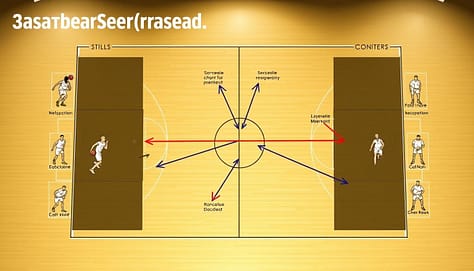
With a set of these set-piece cards, your team learns to “read” plays as they happen. Instead of reacting in confusion, players recognize the initial setup (the stills), anticipate the movement (the arrows), and execute their job (the assignments and counters).
This preparation turns game-time stress into confidence. When the other team calls a timeout to draw up a special play, your team already has a flashcard for it. You’ve changed the script, making their most organized moments your best chance to get a stop.
Start building your library of set-piece cards today. You’ll give your players a visual playbook that turns complex scouting into clear, winning actions.
Game Plan One-Pager: “if/then” boxes and clock management notes
We turn pages of notes into a one-page guide. It uses “if/then” logic and clock management. This is your final, master document. It combines all the great work from your visual tiles, player cards, and set pieces into one powerful sheet.
Think of it as your team’s game-day cheat sheet. It’s not a long book to read; it’s a quick guide for action. Just like a well-structured practice plan streamlines your drills, this one-pager makes your in-game decisions quicker and more informed.
| Feature | Complex Scouting Report | Game Plan One-Pager |
|---|---|---|
| Primary Goal | Information gathering & analysis | Instant communication & execution |
| Format | Multiple pages, detailed text | One page, visual & bullet-pointed |
| Best For | Coach preparation during the week | Player review on the bus & during timeouts |
| Core Content | Raw data, tendencies, full video notes | Distilled “if/then” rules & clock management notes |
The “if/then” boxes are key. They prepare your team for anything. For example: “IF they double-team our star guard, THEN our forward cuts to the open space for an easy pass.” Or, “IF they press after a made basket, THEN we inbound to our primary ball-handler immediately.”
You list the most likely scenarios you scouted. Then, you provide the clear, rehearsed response. This turns panic into quick action.
Clock management notes are also key. These are reminders for end-of-quarter or end-of-game situations. If the opponent presses with 30 seconds left, note it here. If they foul when down by three, write the plan. This ensures everyone knows the script when it matters most.
Let’s build your one-pager. You’ll create two main sections:
- The “If/Then” Battle Plan: List 3-5 of the opponent’s most predictable actions. Next to each, write your team’s counter-move in simple language.
- Clock & Situation Rules: Bullet points for last 2 minutes of each half, overtime procedures, and special inbound plays.
When you’re done, you can hand this sheet to any player. They will know exactly what the team’s priorities are. It prevents confusion and keeps everyone aligned to the game’s flow. This document turns your week of preparation into focused, on-court action.
Distribution Plan: captains’ packets, position group boards, bus review
It’s time to share your hard work with your team. A great scouting report is useless if it’s only in your hands. We need to make sure it reaches every player!
Your plan is like the game day logistics for your scouting report. It’s about giving the right info to the right people at the right time. A Basketball Template Bundle for Coaches can help make this process smooth and easy.
Your plan should have three key delivery channels:
- Captains’ Packets: Give your team leaders more than just the basics. Include deeper insights and plans for different situations. This helps them coach on the court and keep the game plan alive.
- Position Group Boards: Don’t overwhelm your players with too much info. Create boards for each group. Guards learn about other guards, and posts learn about the paint. This makes learning faster and more relevant.
- Bus Review: Use the bus ride to review the game plan one last time. Focus on the top three team concepts and key opponent tendencies. This keeps the plan fresh in everyone’s mind.
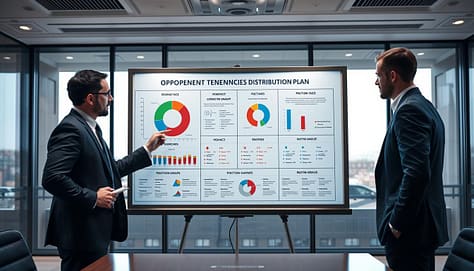
This approach works because it respects each player’s role. A point guard doesn’t need to know about center footwork. By filtering the info, you make sure everyone learns what’s important for their job.
Using a template system makes this easy. Just fill in the slots for captains, guards, and posts. This consistent format helps players know where to find the info every game. It builds a routine of focused readiness.
The goal is for everyone to feel like they own the game plan. When players know their role against the other team’s habits, they play with confidence. Your scouting work helps the whole team execute better. That’s how you win the preparation battle before the game starts.
Postgame Update: what matched the scout vs what changed
Sharp coaches learn a lot after the game ends. It’s not just about watching game footage. It’s about checking if your prep was right.
Take out your pre-game visual tiles and pressure maps. Compare them with your game notes. We’ll look at key questions to close the loop.
- What Matched? Celebrate your scouting wins! Did their defense match your lineup map? Did their star player use the foot you predicted for that shot?
- What Changed? This is the key insight. Did they press in a different zone than your pressure maps showed? Did they use a new set-piece trigger we hadn’t seen?
This honest audit uses the data you tracked. Your Shot Chart Template is for more than live analysis. Use it post-game to check patterns. Did their shots go where you thought? Or did your defense force them into a tough spot?
This process isn’t about being “right.” It’s about getting better. Every difference between your scout and the game is a lesson. It sharpens your eye and makes your next plan stronger.
Make this a regular habit with your team. It turns every game into a lesson for the next one. For more on how to do this, check out these best practices for coaches and trainers. This reflective practice is what sets good teams apart from the best.
Template Pack: printable and mobile formats
You’ve built a visual playbook piece by piece. Now it’s time to bring it all together with a professional template pack. Imagine having every tool we discussed ready to use.
The Basketball Template Bundle for Coaches gives you that complete system. It includes the Scouting Report Template, NBA Scouting Report, Player Evaluation Form, Shot Chart Sheet, and Practice Plan Template.
These resources are designed to connect. Your player cards feed into your scouting report. Your shot charts inform your practice plans. Critical set-piece cards for offense and defense are part of the package, giving you ready-made visual anchors.
Created by coaches at Hoop Mentality, these templates turn complex prep into a straightforward process. You save hours that would be spent designing documents from scratch, including custom set-piece cards.
Access the pack in both printable PDF and editable digital formats. Print binders for your staff or share files directly to tablets. Your entire process becomes mobile and immediate.
This toolkit democratizes high-level preparation. You step into an organized workflow used by winning programs. Streamline your opponent analysis, empower your players, and make your game plan stick.
Get the template pack today. Elevate your coaching with visual tools that work.