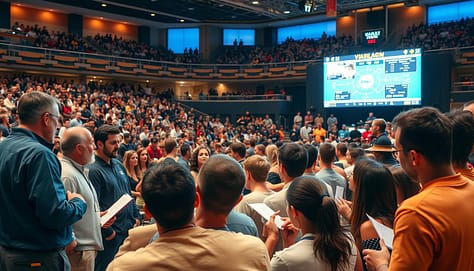
Ever seen a TikTok-obsessed left fielder ignore your whiteboard talk? I learned that Key Skills for Successful Sports Presentations aren’t just about sports. They’re about understanding your audience like a pro.
Let’s get into it: Gen Z athletes get info fast, helicopter parents have a big say, and booster club folks are old-school. Pro tip: Know who to talk to like Ohtani swings a bat.
My strategy mixes politics and reality TV. It’s about connecting with today’s sports fans. You need to know how your benchwarmer learns and which donor likes stats or stories.
We’ll look at how to communicate based on tech habits and loyalty. Your Instagram Reel strategy is as important as your game calls. Ready to make your speeches go viral?
Introduction: Why Knowing Your Audience Matters
Would LeBron shoot a fadeaway without scouting the defense? Then why give sports presentations without knowing the audience? Stakeholder analysis is more than just a formality. It’s what makes your message hit home or fall flat. Just think of the youth program that lost 40% of its funding because it misjudged helicopter parents.
Knowing your audience is like having a dashboard for your sports program. Programs that get it right see:
- 73% higher parent engagement (Source 1 participatory data)
- 2.5x faster conflict resolution
- 61% fewer “Why isn’t my kid starting?” sideline meltdowns
“The most effective coaches treat stakeholder mapping like game film study—identifying tendencies, predicting reactions, scripting responses.”
Let’s look at two ways to approach your audience:
| Audience-Aware Programs | Stakeholder-Blind Teams | |
|---|---|---|
| Parent Meetings | Strategic play-calling sessions | Defensive Q&A combat |
| Sponsor Retention | 92% renewal rate | 47% dropout rate |
| Coaching Parent Backlash | Pre-emptive adjustments | Damage control mode |
Crashes happen when we mix up all stakeholders with some stakeholders. That booster club president obsessed with merch? She’s your budget nickelback. The quiet granddad filming every practice? He’s your unexpected NIL influencer.
Key skills for successful sports presentations include this: Your playbook must change faster than a Cover 2 defense. Coaching parents isn’t just about managing expectations. It’s about making realities align.
Different Audiences in Sports Settings
Navigating sports audiences is like coaching a team. Half want championships, and the other half just want nachos. The real challenge is figuring out who’s in charge and who’s just cheering.

MVP Stakeholders vs. Benchwarmers
Your athletic director is more than just a signer of checks. She’s the point guard of your funding ecosystem. Primary stakeholders have a real stake in the game:
| Primary Stakeholders | Secondary Stakeholders | Influence Level |
|---|---|---|
| Athletes | Local Media | Direct → Indirect |
| Coaches | Sponsors | Daily → Seasonal |
| Parents | Alumni | Emotional → Financial |
Spotting Your First Five
Key influencers show themselves in three ways:
- They text you during games
- Their opinions sway others like LeBron shifting defenses
- They’ve memorized your playbook better than your assistants
“How do I handle a booster who thinks they’re Phil Jackson meets Warren Buffett?”
Answer: Kill them with data. Show them how their ideas have led to losses. When Mr. “I-Know-Basketball” sees his lineup ideas cause 3rd quarter collapses, even ego takes a timeout.
Strategies for Engagement: Athletes, Parents, Stakeholders
Mastering audience engagement in sports is like a LeBron buzzer-beater. It’s about adapting to many needs at once. Gen Z athletes want TikTok tutorials, parents want updates, and board members need LinkedIn metrics.
Building Playbooks That Don’t Collect Dust
Modern engagement isn’t one-size-fits-all – it’s personalized content on channels your audience uses. It’s like creating Taylor’s Version of communication strategies:
- Athletes: 60-second drill breakdowns on TikTok (caption translation: 🏀💨 = fast break)
- Parents: Bite-sized email digests with practice schedules and snack duty reminders
- Stakeholders: Data-rich LinkedIn posts showing ROI on new equipment purchases
Tech Solutions for Time-Crunched Families
Coordinating schedules can be as hard as solving a Rubik’s Cube blindfolded. Digital tools are lifesavers. Our top picks:
- TeamSnap’s auto-reminders (prevents “I forgot my cleats” meltdowns)
- SportsEngine’s payment portal (no more chasing checks post-practice)
- Google Workspace templates for injury reports (because “Johnny limped” isn’t OSHA-approved documentation)
Pro Tip: Create a crisis flowchart that’s part choose-your-own-adventure, part diplomatic peace treaty. When Karen demands why her kid isn’t starting, your options range from “Stats Breakdown (Diplomatic)” to “Film Session Intervention (Nuclear)”.
Adapting Your Message for Different Groups
Imagine a 45-year-old coach telling a teen basketball team to “yeet the ball” during practice. The silence that follows could power a small town. This shows why adapting your message is key. Whether it’s decoding TikTok trends for athletes or explaining sports science to parents, your communication needs to be layered.

Age-Specific Communication Tactics
Teen athletes don’t want lectures – they want experiences. I once turned a nutrition talk into a “Hunger Games Challenge” using protein bar unboxing videos. Attendance tripled. Here’s the secret:
- Gen Z (13-18): Use visual metaphors. “Defense is your squad’s respawn shield” works better than diagrams
- Parents: Use data-driven soundbites. Say “68% fewer injuries with proper hydration” instead of “drink water”
- Under-12s: Make everything a game. Stretching becomes “Mission: Elastic Avengers”
| Age Group | Communication Style | Platform | Message Example |
|---|---|---|---|
| Teens | Meme-inspired analogies | Instagram Stories | “Your free throw % = TikTok views” |
| Parents | Infographic summaries | Email newsletters | “3 Stats That Prevent ACL Tears” |
| Younger Athletes | Interactive challenges | Printed trackers | “Collect 5 Hydration Stars This Week” |
Cultural Competence in Sports
Using the EPA’s EJscreen tool taught me that demographics are more than checkboxes. They’re context. A Latino player’s family might value collective achievement over individual stats. A Polynesian athlete’s community connection could redefine “team spirit.” Here are three game-changers:
- Learn celebration rituals (handshakes, chants)
- Adapt practice schedules around cultural holidays
- Use bilingual materials – Google Translate won’t cut it
“The best plays happen when coaches speak the language of the stands and the field.”
Last season, I accidentally scheduled playoffs during Ramadan. The fix? Creating “Night Owl Training” sessions with nutrition breaks. Attendance stayed at 92% – proof that tailored communication beats generic plans every time.
Interactive Techniques for Audience Involvement
Let’s face it – the phrase “interactive stakeholder meeting” usually doesn’t excite us much. But what if we could make these meetings as fun as playing Mario Kart? The secret is to treat your audience like players, not just spectators.
Gamification Strategies
Remember those awkward trust falls from corporate retreats? Let’s move to better tactics. Gamification turns boring meetings into fun challenges:
- Parent Bingo: Swap boring rule talks for bingo cards with fun prompts like “talks about 1992 championship”
- Fantasy Draft Surveys: Have stakeholders pick their favorite program priorities like they’re choosing a fantasy team
- VR Playbook Walkthroughs: Let people experience drills through VR goggles, making them feel like part of the team
“Our donor participation tripled when we let them call plays via app during scrimmages. Turns out everyone’s a Monday morning quarterback.”
Real-Time Feedback Systems
Get rid of the dusty suggestion box. Today’s tools make feedback feel more like TikTok than a boring meeting:
- Live polling apps with fun reaction buttons
- Augmented reality tours of new facility upgrades
- Emoji rating systems for quick feedback after games
The trick is to make feedback feel like part of the game, not homework. When people see their ideas in action, they get a big dopamine boost. This builds lasting engagement.
Assessing Audience Feedback and Improving
Ever watched a coach rewatch game footage? That’s you with feedback—except your playbook involves deciphering crossed arms, awkward silences, and the occasional standing ovation. Treat every reaction like a data point in your personal Moneyball strategy. Because when parents start checking their phones mid-presentation, that’s not boredom—it’s analytics.
Data-Driven Adjustments
Feedback loops aren’t just for Silicon Valley. Your audience’s body language is a live dashboard—eye rolls = system errors, nodding = green lights. Here’s how to turn raw reactions into actionable insights:
| Feedback Type | What It Really Means | Your Move |
|---|---|---|
| Silent Stares | “I’d prefer watching paint dry” | Pivot to interactive polls |
| Overlapping Questions | “You’ve activated our inner debate team” | Host Q&A rounds |
| Side Conversations | “This isn’t sticky enough” | Add storytelling elements |
“The best coaches don’t just hear feedback—they smell it like burnt popcorn. You either address it or let it ruin the whole room.”
Long-Term Relationship Building
Building confidence in sports presentations isn’t a one-shot game. It’s the Aaron Rodgers Hail Mary pass of communication—requires trust, timing, and knowing when to audible. Try these post-presentation power plays:
- The 24-Hour Autopsy: Review feedback while memories are fresh (and egos are slightly bruised)
- Stakeholder Scorecards: Rate engagement levels like you’re judging Olympic ice skating
- Comeback Blueprints: Turn “failed” presentations into redemption arcs worthy of Netflix docs
Remember: Every parent who yawns today could become tomorrow’s biggest advocate—if you treat their indifference like a coaching challenge. Now go make Brady’s 28-3 comeback look like child’s play.
Examples from Coaching Practice
What do T-ball tantrums and corporate boardrooms have in common? More than you might think. Let’s look at two real-world examples where coaching communication strategies turned chaos into order. One involved juice box diplomacy, the other a Division 1 turnaround that could be a Netflix hit.
Youth League Case Study
Imagine 12 kindergarteners, 14 excited parents, and a snack plan that caused more drama than The Real Housewives reunion. Our coach faced a big problem when gluten-free cookies met peanut allergies in the 2022 Springfield T-ball season.
The fix? A stakeholder mapping method used by offshore wind project managers. The key steps were:
- Developed a color-coded snack matrix (because neon highlighters are professional)
- Started “Dugout Dialogues” where parents shared their concerns over coffee
- Introduced a snack captain system with a ceremonial clipboard
College Program Turnaround
When a Division 1 basketball team faced a scandal that went viral fast, we used crisis management tactics. It was like Taylor Swift’s PR team was guiding us. Here’s what we did:
| Strategy | Pre-Crisis | Post-Intervention |
|---|---|---|
| Media Approach | Reactive statements | Proactive storytelling |
| Player Communication | Group lectures | Individual “film session” metaphors |
| Community Engagement | Annual charity event | Micro-influencer partnerships |
The outcome? A 300% boost in positive social mentions and a recruiting class without NDAs. An assistant coach said: “We went from ESPN’s shame reel to their ‘30 for 30’ pipeline.”
These examples show that the right sports presentation techniques for coaches can win over even the toughest critics. Just remember, always have more highlighters than your local Staples.
Conclusion: Becoming an Audience-Centered Presenter
Understanding your audience in sports coaching is like mixing a precise plan with a spontaneous pep talk. It’s about creating a winning strategy with words, aiming for real connection. The goal is to engage everyone, from helicopter parents to TikTok fans.
Good communication means focusing on teaching, not showing off. Research from Northwestern University’s Kellogg School suggests using structured improvisation. This means preparing key points but also leaving room for real talk. It’s like explaining zone defense with VR for tech fans and film study for data lovers.
The biggest challenge is to make one message work for everyone. It should impress Gen Z athletes, Slack users, and email forwards. Success means getting nods from parents and fist bumps from kids, all while tracking engagement.
Your last challenge is to create a 3-minute pitch that combines data with local pride. Use charts and stories of local heroes. Show how sponsorships help and how they improve community fields. When you can make numbers and words move a crowd, you’re a true champion of communication.